
A last-minute hotel can be convenient when travel changes unexpectedly, but the best choice is not automatically the room with the lowest number on a phone screen. The real decision is whether a room is genuinely available for your party, reachable at your arrival hour, cancellable on workable terms and priced clearly enough to compare. Use a short verification process before paying. This guide does not report live prices or claim that same-day rooms are always discounted.
Define the booking window and nonnegotiable needs
Start with the exact local check-in date, expected arrival time and number of guests. A reservation made after midnight can accidentally select the following night, especially when you’re crossing a time zone or booking after a delayed flight. Record how many beds you actually need, any accessible-room requirements, whether a child needs a separate sleeping space and whether a late arrival is accepted. Location should be measured against where you will be that evening, not just the city’s geographic center.
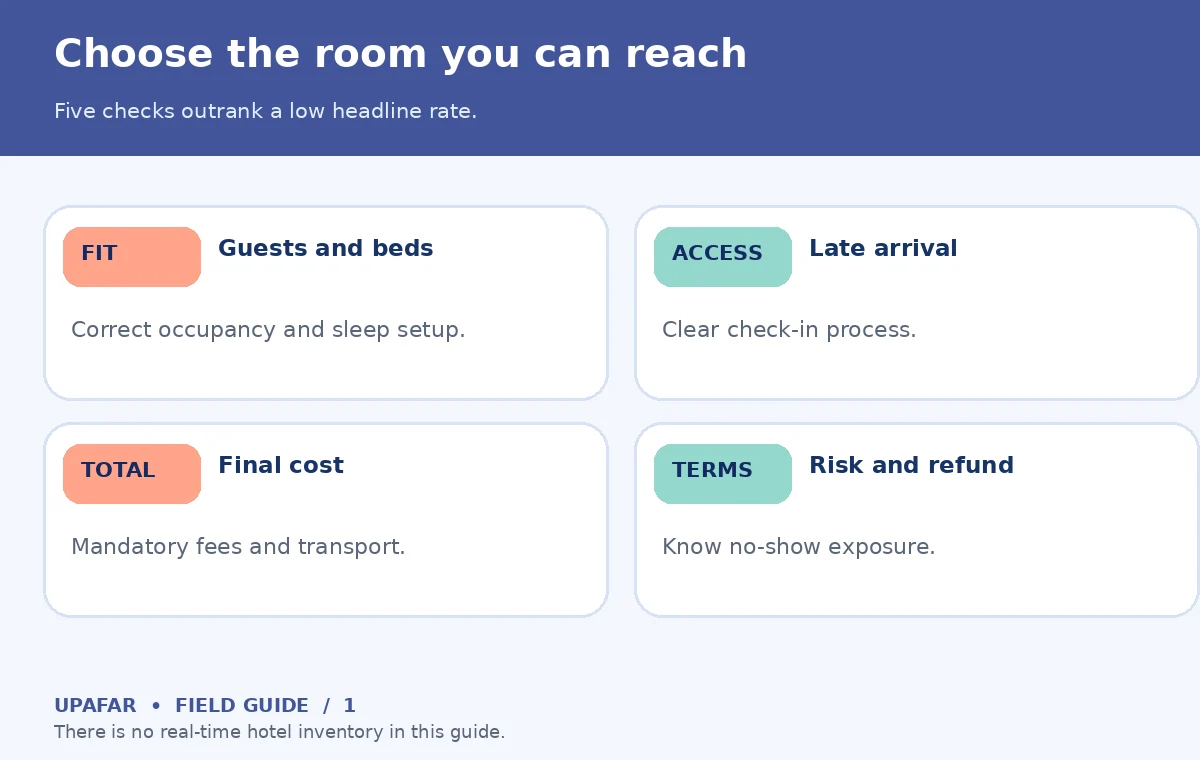
Write a simple hard-stop list: safe transfer, acceptable sleeping configuration, reliable check-in, total cost, and any necessary mobility or medical accommodations. If one cannot be confirmed, the booking is not ready. Same-day availability can move while you compare options; a search-result listing is not a reservation until the provider confirms it. Do not treat a displayed room type as proof that the exact configuration will be assigned without reading the booked room description.
Compare final stay cost instead of headline rate
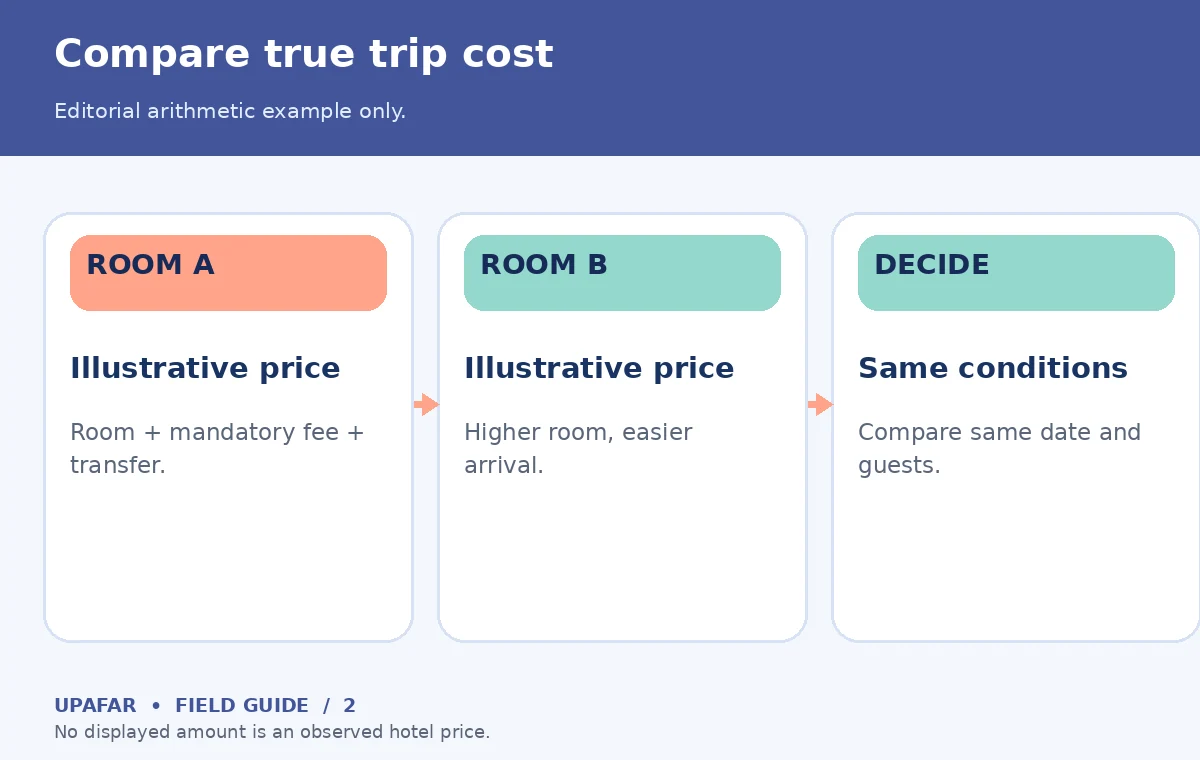
For two options, write the full amount payable for the same number of nights and guests. Include mandatory property charges, relevant taxes, parking if your trip actually needs it, transport to the hotel and breakfast if it would otherwise be an essential expense. For example, a hypothetical $145 room with a $35 unavoidable charge and a costly late-night transfer may be less attractive than a $175 room by the station. Those dollar amounts illustrate comparison arithmetic; they are not observed market rates.
The US Federal Trade Commission’s Rule on Unfair or Deceptive Fees guidance explains that, for covered short-term lodging, an advertised total must include mandatory charges known and calculable upfront, subject to stated exclusions such as government taxes and genuinely optional add-ons. This US rule is not a promise about booking displays in every country. You still need to inspect the final amount and payment terms. Beware of comparing a prepaid nonrefundable rate with a flexible price as though they buy the same risk.
Understand the refund clock before checkout
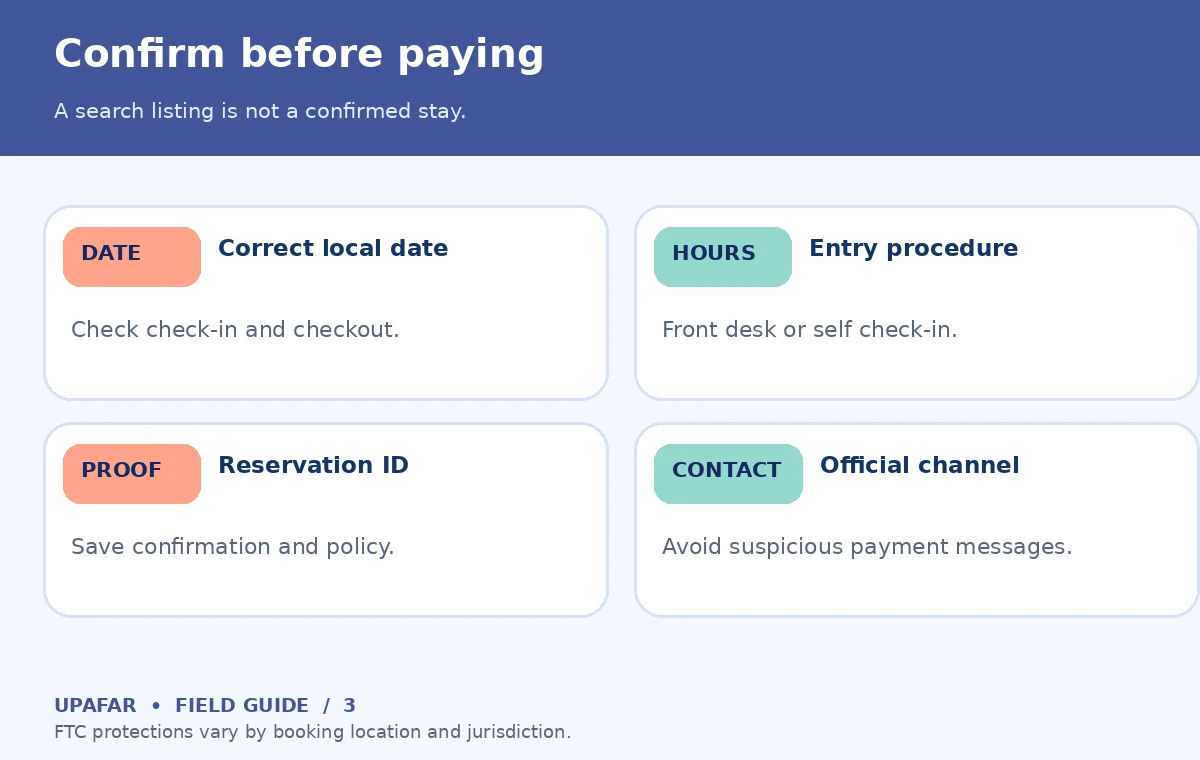
Last-minute stays often have shorter decision windows. A listing labeled ‘free cancellation’ may apply only until a specific date and time, may differ by room and may exclude no-shows. Identify the local time zone of the cancellation deadline, any prepayment, what happens to a deposit, and whether a late arrival without notice could be considered a no-show. Take a copy or screenshot of the terms and confirmation before leaving reliable connectivity.
Avoid interpreting ‘pay at property’ as ‘no financial commitment’. Some offers still require a payment card to guarantee arrival or charge for a no-show. A third-party booking platform and a hotel can have separate support processes; confirm whose rules control your purchase. If your travel plans remain unstable, the extra cost of a fully cancellable offer may buy useful flexibility. If the night’s destination is certain, a legitimate prepaid offer may be acceptable after checking the nonrefundable terms.
Verify late check-in and actual room access
Do not infer 24-hour front-desk service from a hotel’s overall reputation. Find the property’s official phone number or direct contact details and confirm the latest time someone can hand over keys, the process for self-check-in and whether the booking will be held when your train or flight is late. For a remote resort or small inn, ask how you will enter the property after reception closes and whether your car or taxi can reach the entrance at night.
Before arrival, save the hotel’s street address, official website, booking reference and check-in instructions offline. Confirm that the property sees your reservation if you booked through another platform, especially if you’re arriving within hours of purchase. Never send payment-card details or identity documents through a suspicious new message link merely because it claims to be an urgent verification request. Use the booking platform’s legitimate account and the hotel’s independently sourced contact channel.
Choose the location that reduces night-of risk
Hotel location is a transport choice. A city-center listing may still be a poor fit if the final mile requires a difficult late-night transfer, steep stairs or an area unfamiliar to your group. Compare reachable public transport at the actual arrival hour, taxi availability where applicable, lighting, clear building access and the route from the station or airport. If you have a car, check parking and arrival access instead of assuming it is included.
Separate ‘best hotel for a planned holiday’ from ‘best room after a missed connection.’ For an unplanned airport overnight, proximity to a safe transfer and dependable check-in may outweigh sightseeing access. For a multi-night stay in a walkable city, location near the next day’s obligations may matter more than being beside the airport. Avoid claiming that any hotel is safe, cheap or available merely from its name or neighborhood; evaluate the exact property and current conditions.
Run a ten-minute comparison without rushing payment
Open only a small shortlist of realistic options and compare like for like. Use the same stay date, guest count, currency and bed needs. Check whether the property has a current official page; compare total terms against a reputable booking provider rather than assuming either channel is always cheaper. Ask for a written record of unusual requests, such as a guaranteed late check-in or accessible room, before making a nonrefundable purchase.
A decision worksheet has five rows: full price; arrival reliability; room fit; refund exposure; and next-day location. Mark each as confirmed, unresolved or unacceptable. Unresolved arrival procedures are more serious than an imperfect breakfast. Only complete the reservation after the payment page shows the correct dates and guests. Then make sure you receive a confirmation identifier and can reach someone if the room is unavailable on arrival.
Know when not to book a last-minute room
Waiting until arrival may be a poor strategy during a large event, disruption, holiday or when your requirements allow few acceptable properties. Conversely, an itinerary still changing rapidly may not justify buying a nonrefundable room too early. There is no trustworthy universal rule that hotel prices fall at a certain hour or day before check-in. The correct booking time depends on how much availability risk and refund exposure you can tolerate, not on a viral ‘secret timing’ claim.
For travelers with children, limited mobility or night-arrival constraints, reliable confirmation is particularly valuable. If a third-party page fails or a listing seems inconsistent, stop and verify through an official contact route rather than clicking alternate payment requests. Remember that consumer-protection regulations differ by jurisdiction; the FTC’s May 2025 announcement explains the US pricing transparency framework but does not guarantee refunds or specific booking outcomes.
How We Research last-minute hotel decisions
We reviewed the FTC guidance for total prices and mandatory lodging fees and its May 2025 effective-date notice on October 19, 2026. The comparison framework is original editorial analysis and does not draw from a live hotel inventory feed. No rate, room availability, partnership, personal property inspection or refund approval is claimed. Confirm the hotel’s policies and the checkout amount yourself. See the UpAfar affiliate disclosure for general linking practices.
Frequently Asked Travel Questions
Sometimes rates change, but there is no universal guaranteed discount window. Availability, events and hotel policies vary.
Double-check the local check-in date and that the property can actually provide room access at your arrival time. Confirm directly if unusual.
It may mean a charge even if you cancel or never arrive. Read the exact room-rate terms for prepayment, cancellation and no-show conditions.
For covered short-term lodging under the FTC rule, known mandatory fees generally must be included in the advertised total, subject to permitted exclusions; still verify the payment summary.
For a same-day or very late arrival, confirming reservation receipt and access instructions directly with the property can reduce uncertainty.