
A useful beach trip packing list is not a shopping catalog. It is a system for managing sun, drinking water, wet clothing, valuables and the journey home. A single afternoon with public showers needs less luggage than a week in a rental without laundry, while a remote cove may require more self-sufficiency than a serviced resort beach. Pack in three layers: what you wear, what you reach for during the day, and what you replenish across several days. Check local beach rules before adding tents, umbrellas, coolers or water equipment.
Start with the beach and the facilities it actually has
Write down whether your destination is a guarded swimming beach, an exposed surf beach, a hotel-maintained shore, a lake, or a remote access point. Then verify restrooms, drinking water, changing rooms, shade, waste bins, parking or transit, and any lifeguard schedule. A beach without public water needs a more deliberate hydration plan. A cliff path or long walk from transit can make a rolling cooler a liability. An ocean beach with high surf requires different safety expectations from a shallow managed pool; none is risk-free.
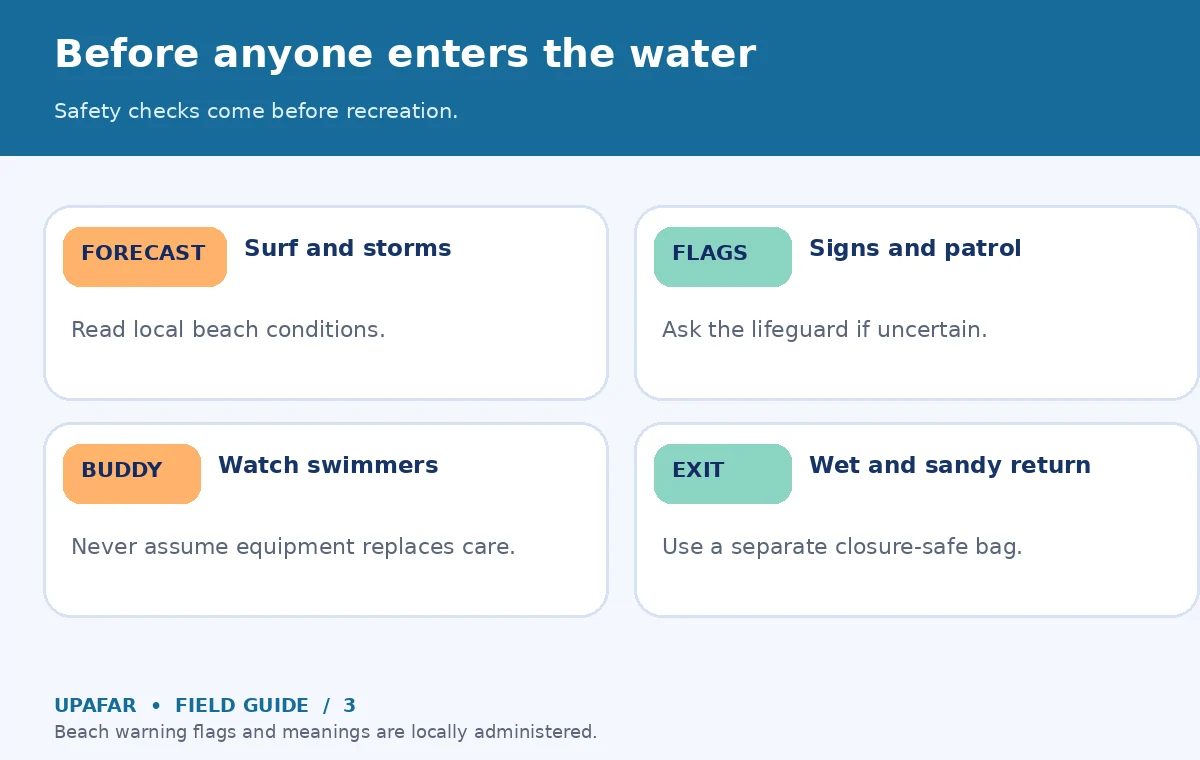
Also consider the route home. After a beach day, everyone may be damp, sandy and tired. Bring a closure-safe wet bag or separate washable tote, a clean layer of clothes and footwear you can use on the return transfer. If you are flying immediately afterward, keep airport security, airline baggage and liquid-size rules separate from what is allowed on the sand. Do not buy every suggested accessory before confirming what your lodging already supplies.
Pack the on-body layer for sun, heat and surfaces
Choose a broad-brimmed hat or other protective headwear, sunglasses, a shirt or cover-up, comfortable footwear and swimwear suited to the activity. A dry shirt can be useful for transportation and evening stops. For sun protection, follow the FDA’s sunscreen guidance: use a broad-spectrum product, apply it generously and reapply at least every two hours, more often when swimming or sweating and as directed by water-resistance labeling. No sunscreen is truly waterproof. Shade and clothing remain important.
Do not treat a high SPF number as permission to stay in the sun indefinitely. If traveling with an infant younger than six months, the FDA advises consulting a healthcare professional before applying sunscreen; shade and appropriate clothing are especially important. Check the product label and personal sensitivities. When traveling with children, favor easy-to-put-on layers and a routine that does not depend on everyone remembering sunscreen only after entering the water.
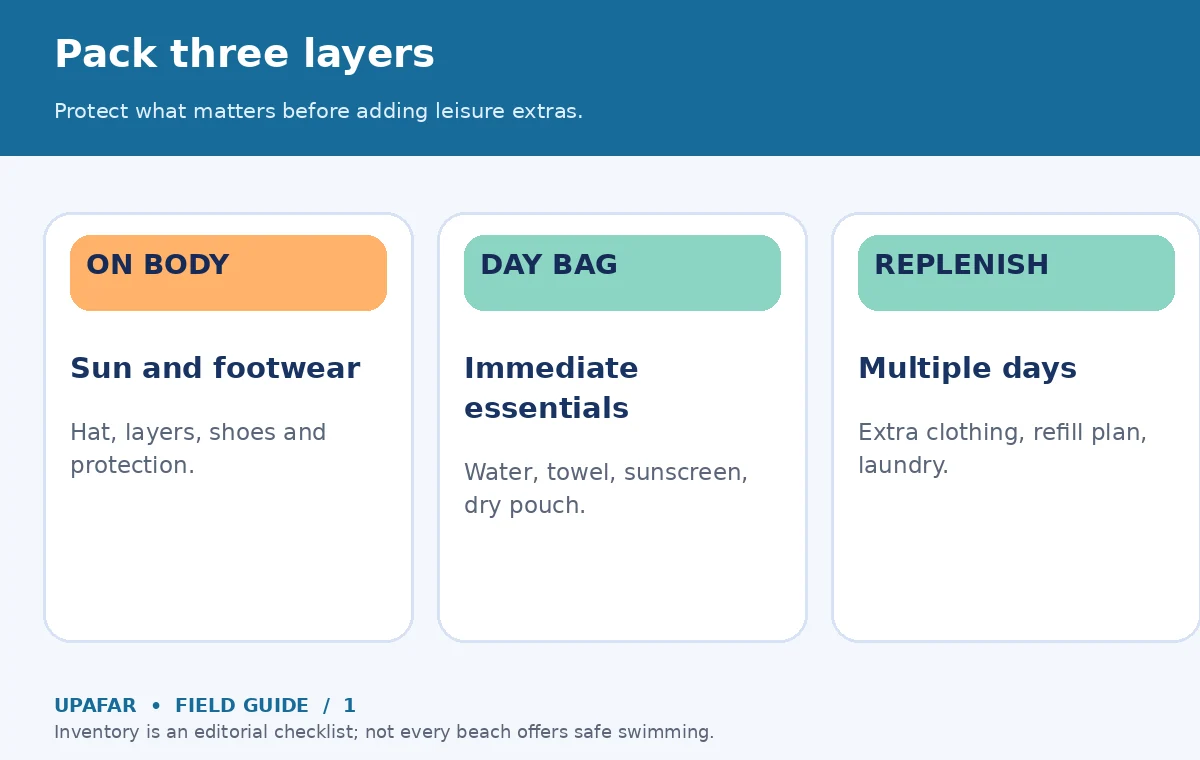
Build a small and accessible beach-day bag
Useful basics include drinking water or a reliable refill method, sunscreen, a towel or quick-dry wrap, a hat, wipes or tissues, a phone, minimal cash or payment method, and a waterproof place for keys. Bring medications and any personal first-aid items you actually use. Keep food protected from heat and animals; perishable snacks need an appropriate cooler or shorter carrying time. A light reusable trash bag helps when bins are unavailable, and a compact dry bag keeps damp clothing away from electronics afterward.
Leave rarely used electronics and expensive jewelry in secure storage when practical. A water-resistant phone pouch is not a guarantee against leaks or theft, and an unattended bag remains a risk. For travelers with mobility needs, the essential item might be an accessible beach mat, beach wheelchair reservation or closer drop-off rather than a general-purpose tote. Verify local availability and access before arrival, and avoid assuming that scenic marketing photos represent the actual beach entrance.
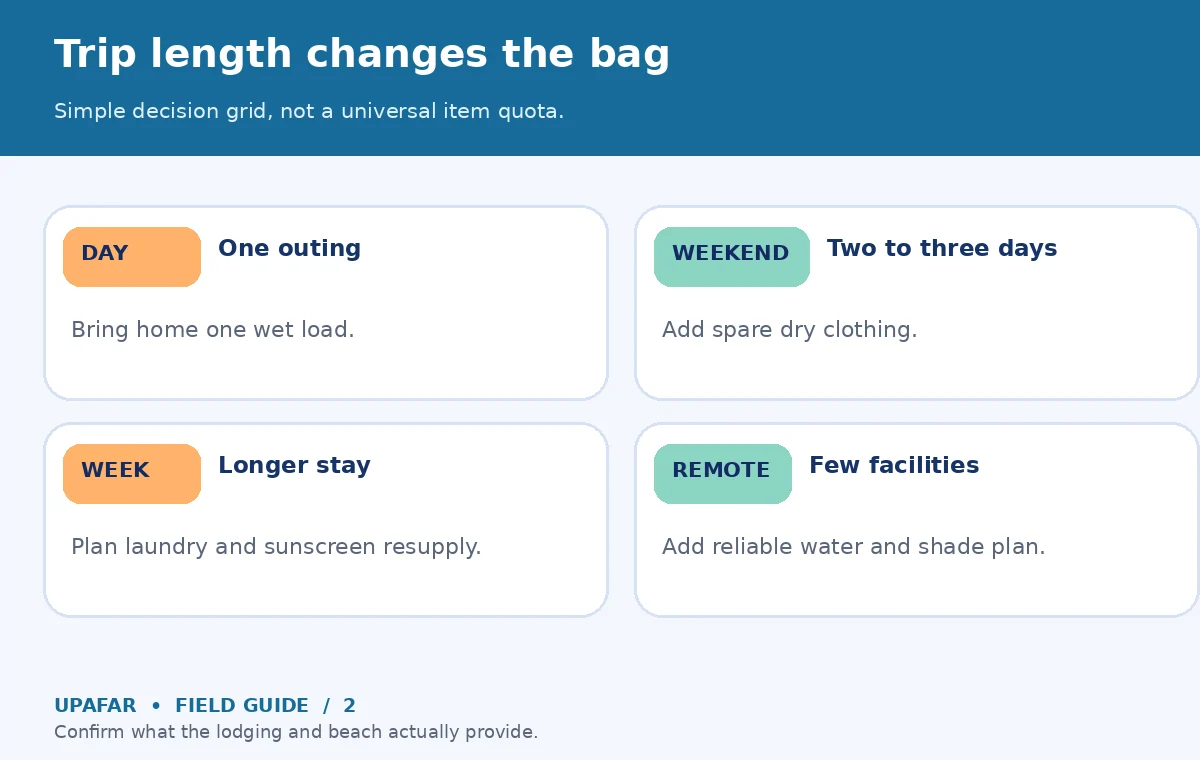
Adjust quantity to a day, weekend or longer stay
For a day outing, plan a single clean change of clothing and one controlled wet return. For a weekend, add dry clothing, sleep essentials and enough personal care supplies for the stay. For a week, ask about laundry and plan reapplication supplies: sunscreen is consumed repeatedly, and damp towels may not dry overnight in humid rooms. If your hotel supplies towels or drinking water, confirm whether that is included or restricted to a pool area. Packing light is helpful only when missing essentials can realistically be obtained safely.
A remote beach with few services deserves a separate check of safe water, shade, communications, road access, tide conditions and return transport. Do not rely on an unverified shop, taxi or cell signal. If reaching the beach requires a boat, walking across rocks or a steep path, consider whether the people and equipment in your party can manage it. A bulky beach cart designed for pavement may be unusable on stairs or loose sand.
Make water conditions a pre-entry decision
Packing a swimsuit does not make swimming appropriate. The National Weather Service recommends checking local beach conditions, talking to lifeguards and looking for posted warnings. The NWS also notes that local warning flags are administered by beach authorities and can vary; their absence is not a guarantee of safety. Check for currents, shorebreak, thunderstorms and beach closures before entering water. Prefer swimming in guarded areas, never swim alone, and supervise children actively. Swimming pools and surf beaches require different skills.
If someone is pulled by a rip current, NWS advice is not to fight the current directly; stay afloat, seek help and, if able, swim parallel to the shore to escape the flow. This paragraph is background risk awareness, not a substitute for lifeguard instructions or swimming competence. Never attempt an improvised rescue that puts another person at risk. For boat or organized water activities, check for appropriate, correctly fitted life jackets under operator and local requirements. Inflatable beach toys are not safety equipment.
Understand baggage limits before your flight
For a US airport departure, TSA’s 3-1-1 liquids guidance applies to standard carry-on creams, gels and lotions, including many sunscreens, subject to applicable exceptions. Pack a compliant container for the cabin or place larger permitted bottles in checked luggage. Do not assume a large aerosol product is accepted without checking dangerous-goods rules. If you are not flying through a US checkpoint, verify the relevant local screening policy instead. A beach checklist and an airport packing list serve different stages of the same trip.
For a beach town reached by bus or ferry, choose bags that can be lifted safely and kept closed. Put wet swimwear inside a separate pouch rather than leaving it against passports or clean clothes. When returning to accommodation, rinse equipment only where allowed and avoid dumping sand into plumbing. Respect protected dunes and carry out waste. These small steps reduce friction for your group without adding complicated gear.
How We Research and update this checklist
The sun guidance reflects the FDA’s 2026 sunscreen advice; the water-safety checks come from National Weather Service rip-current guidance, and US cabin-liquid context from TSA, checked October 19, 2026. Quantities and bag layers are practical editorial suggestions, not official inventory requirements. We have not checked beach facilities, weather or closures for a particular destination: those need current local verification. See UpAfar’s affiliate disclosure for our general linking policy. No brand or packing product in this guide is claimed as a paid partner.
Frequently Asked Travel Questions
Prioritize water, shade options, sun-protective clothing, sunscreen, towel, a dry place for valuables and a way to carry wet items home; add personal essentials.
Choose enough for your party to apply liberally and reapply per label, at least every two hours and more often with swimming or sweating. Needed quantity depends on bodies, exposure and duration.
For boating and relevant water activities, use properly sized approved life jackets; ask local operators about requirements. A flotation toy is not a substitute for close supervision.
Yes. Verify whether towels, umbrellas, drinking water and laundry are supplied, then leave at home what is genuinely available.
For US airport security, standard large liquids generally do not meet TSA 3-1-1 restrictions; review current exceptions and put compliant containers in carry-on or qualifying larger products in checked luggage.