
The simplest way to plan a trip is to make the decisions in the order they can still be changed: decide why you are going, test whether the destination and dates work, set an all-in spending ceiling, build one realistic daily anchor, then book the least-flexible components. This is a decision sequence, not a giant packing list. The most expensive planning error is committing to flights or lodging before checking whether the destination, transport, health preparations, and trip pace actually fit your circumstances. Start with a two-sentence trip brief: who is traveling, what matters most, and what would make the journey a failure.
Define the Trip Before Choosing Deals
Write down the nonnegotiables in plain language. Is the priority rest, food, visiting people, outdoor activity, or seeing several cities? Specify how many nights you actually have, including arrival and departure days, and identify who has the least flexibility. A family with a toddler, a traveler with mobility needs, and a solo traveler working remotely may all be offered the same flight; their successful itineraries will be entirely different. Give each person one must-do experience and one avoid-at-all-costs condition. This creates a useful filter when a tempting discount or beautiful hotel distracts you from the original purpose.
Next define a simple decision boundary: a maximum total trip spend, a minimum acceptable amount of free time, and the latest acceptable return. List your possible travel dates as a range, not a single ideal day. For destinations with festivals, monsoons, major holidays, or seasonal activities, confirm the actual operating and weather implications before declaring dates feasible. Do not treat averages as a prediction for a particular week. Your aim is to reject bad-fit options quickly, leaving two or three plausible destination-date combinations instead of thirty tabs.
Run a Feasibility Gate Before Booking
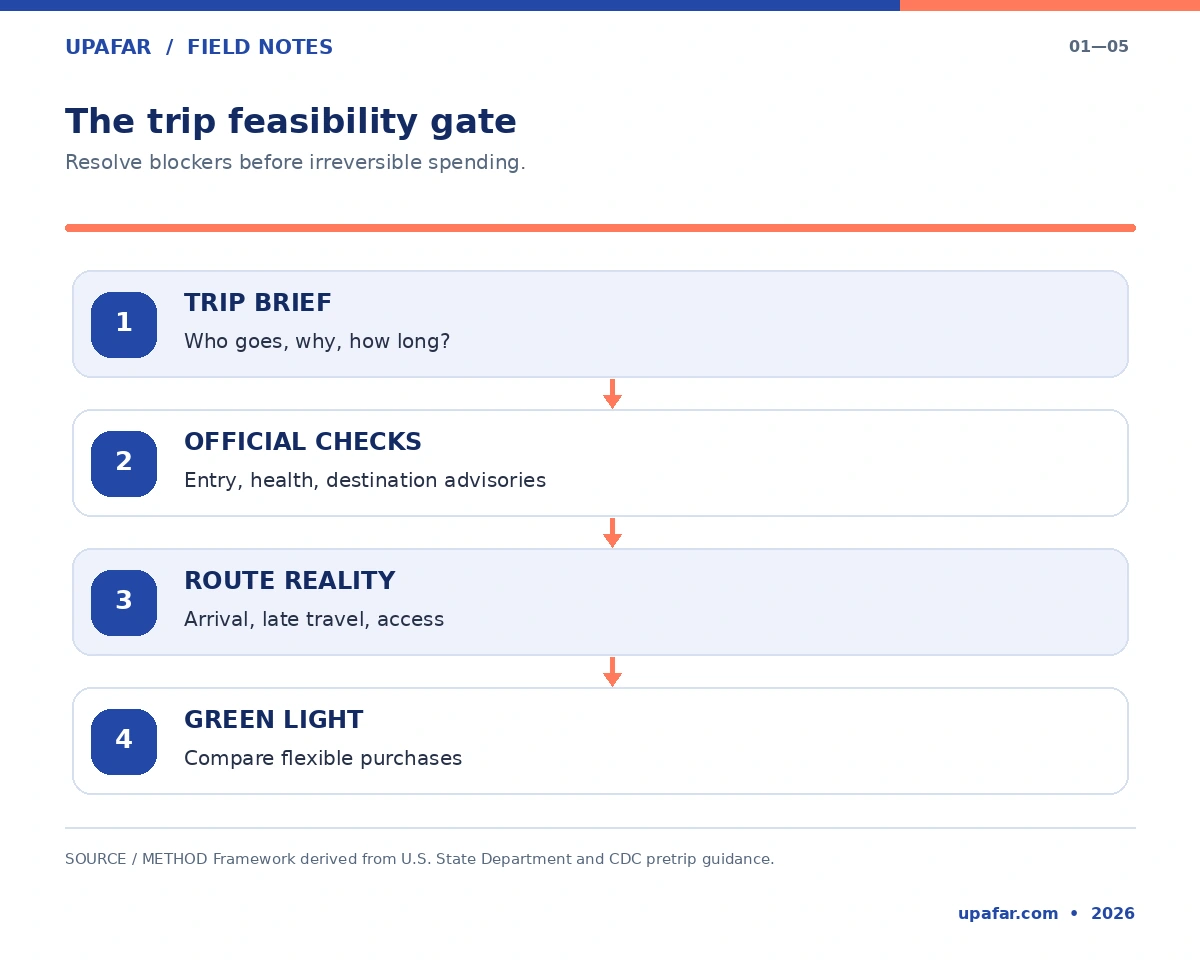
For international travel, requirements depend on passport, route, residence status, and purpose of visit. Check the destination government and any transit-country rules directly; U.S. travelers can start with the State Department destination checklist. Check document validity, entry permissions, and any required travel health preparation before making nonrefundable purchases. The CDC advises reviewing destination-specific health guidance and, when relevant, discussing vaccines or medicines with a professional well before departure. This article intentionally does not offer country-specific visa advice or fixed medical rules because those demand personalized, current confirmation.
A workable trip also needs realistic transport. Measure where the airport, train station, and attractions are relative to a proposed lodging area. Ask whether arriving late changes your choices, and whether the planned train or ferry is actually operating when you need it. Two attractive destinations on a map may add an entire day of transfers after checkout, station travel, waiting, and hotel check-in. If one transfer would consume the only available sightseeing afternoon, remove a stop or add a night. This is an example of solving an itinerary problem before money is committed.
Build a Total Budget With Flexible Space
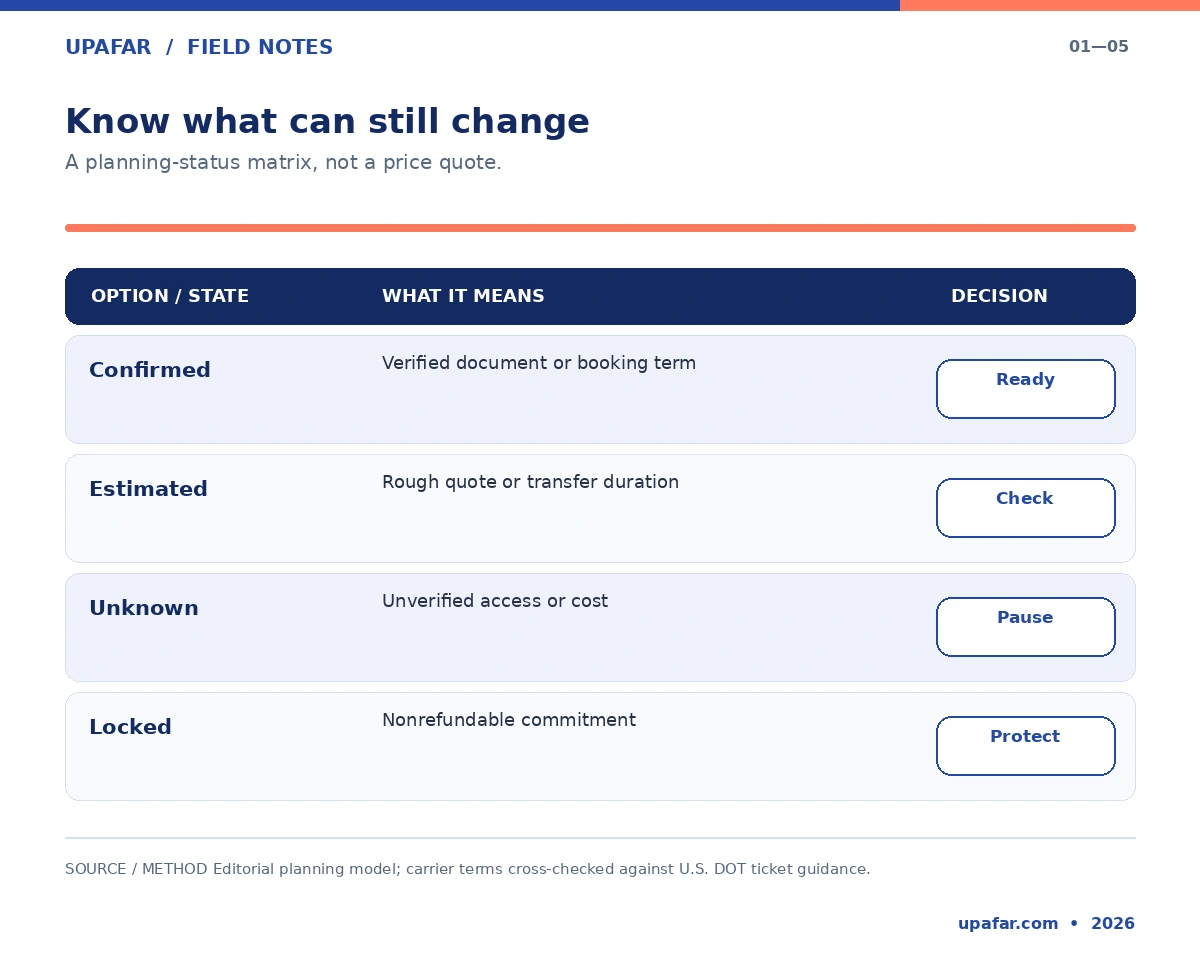
Use categories instead of a single rough dollar figure: transportation to and within the destination, lodging, meals, local mobility, paid activities, communications, and a contingency. Separate known quotes from estimates and unknowns. For a sample planning exercise, imagine an overall ceiling of 100 budget units, not dollars: allocate units to unavoidable bookings first, then necessities, then discretionary experiences, and leave a reserve. The proportions should come from the travel style and actual quotes; they are not universal spending targets. A cheap airfare can be the costly option when its airport transfer, baggage, and arrival time create extra expenses.
Track each commitment as refundable, changeable with conditions, or nonrefundable. Avoid comparing a room-only quote with a package quote until you account for meals and local transport. If an activity is the main reason for the trip, verify its operating dates and booking conditions before choosing the least-flexible flight. If your destination has uncertain access or weather dependencies, retain a backup plan rather than relying on a perfectly timed sequence. You are designing a trip that remains pleasant when one component shifts, not one that only works if everything runs exactly on time.
| Decision | Evidence needed | Move forward when |
|---|---|---|
| Destination | Entry, health, season, accessibility | Nonnegotiables are feasible |
| Dates | Leave, transport, activity calendars | One workable date range exists |
| Budget | All-in quotes and contingency | Must-haves fit the ceiling |
| Bookings | Change and cancellation terms | Risks are understood before payment |
Design Days Around Geography and Energy
Start by placing one anchor activity on each full day and grouping nearby experiences around it. Keep the first afternoon light after a long travel day; fatigue is not a moral failure to be managed with more reservations. Count door-to-door movements, not just the duration shown for a train or flight. Moving hotels can be worthwhile if it unlocks a new region, but switching hotels for a single attraction often converts a vacation day into a logistics day. Confirm whether museums or attractions require advance reservations, and allow space for weather and spontaneous discoveries.
Think in three layers: anchors that need advance commitment, flexible nearby choices, and an indoor or low-effort fallback. A day with one booked museum and two nearby neighborhoods is more resilient than a list of six fixed time slots in different districts. If the trip is short, use fewer bases and reduce intercity travel; if it is long, add slower days rather than multiplying stops. This is a broad planning method, not a replacement for the dedicated travel-itinerary article planned elsewhere in the queue.
Book in Risk Order, Not Excitement Order
A sensible purchase order is based on scarcity, consequence, and flexibility. Secure a genuinely scarce main experience once its terms are clear; compare flight and lodging cancellation conditions before choosing what to lock in. A sale countdown is not proof that the offer is the best fit. Read the actual rate and fare details, noting what happens if your dates, party size, or route change. Confirm baggage and optional service charges directly with the operating carrier. Keep all confirmation numbers and key conditions in an accessible place, including an offline copy where practical.
Travel insurance is a separate decision, not an automatic solution for every loss. Compare exclusions, medical coverage, evacuation terms, and what existing coverage already provides; do not assume a card or health plan will cover a given event. If you travel with prescriptions, assistive devices, or specific access needs, build the relevant checks into planning early rather than leaving them for departure week. The goal is to minimize unpleasant surprises through specific documents and confirmations, not through confident guesses about what any provider will do.
Use a Final Review That Changes Decisions
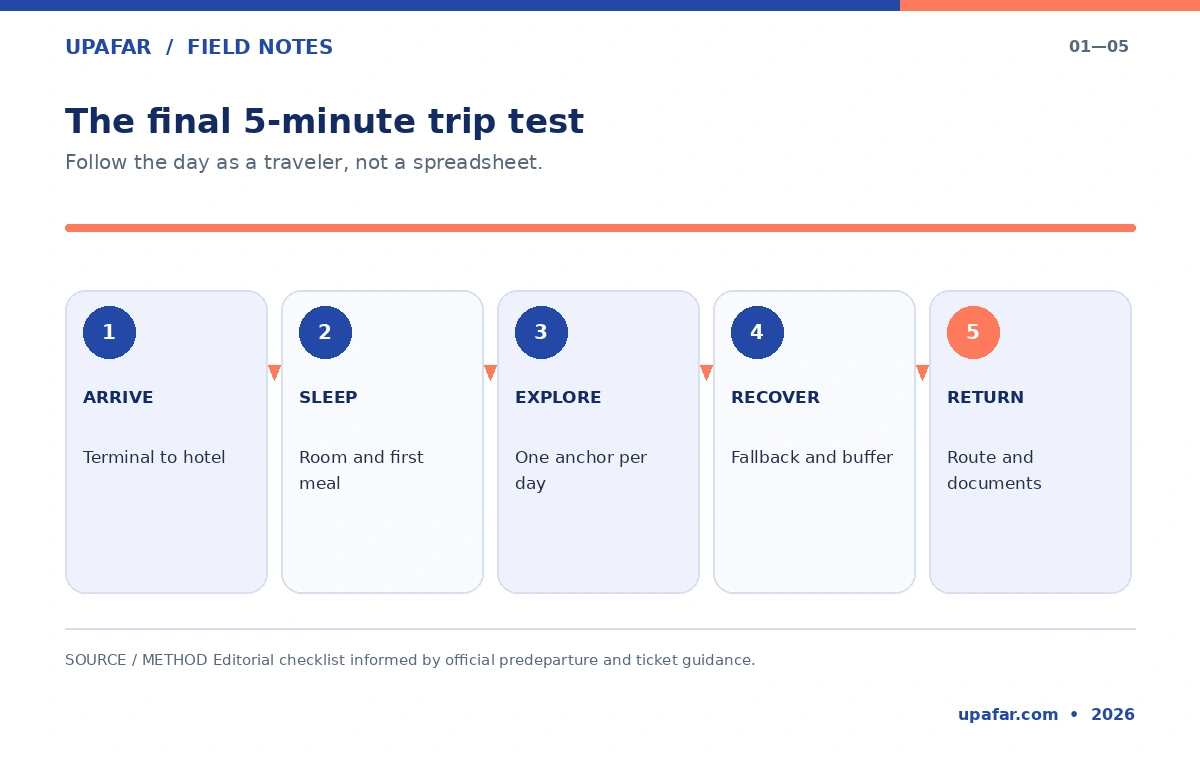
Before your cancellation deadlines, replay the trip from touchdown to checkout. Can everyone get from the arrival terminal to the hotel? Does the first meal still work after possible delays? Are there unavoidable transfers between accommodations? Does the budget include payments that occur locally? Then review your most fragile assumption: perhaps a late-night shuttle, a weather-dependent boat, or a tight connection. If one failure cascades into several missed bookings, change the plan while you still can. Your finished plan should be clear enough that a travel companion could follow it without asking where the next ticket is.
How We Research and Keep This Guide Current
This guide separates lasting decision methods from rules and prices that can change. We checked the following primary sources on October 19, 2026: U.S. Department of State international travel checklist (destination-specific entry and passport checks and copies of key documents); CDC Before You Travel (destination health assessment and advance medical planning); U.S. DOT Buying a Ticket (fare restrictions and ancillary costs to verify before airfare purchase). Examples and visual decision tools are editorial frameworks, not live quotes or guaranteed offers. Recheck operators, carriers, airports, and government requirements for your exact trip. UpAfar may earn a commission on qualifying links if relationships are activated; our affiliate disclosure explains how referrals are handled. No booking prices or availability are asserted here.
Frequently Asked Questions for This Topic
First verify feasibility and the purpose of the trip. Then prioritize scarce experiences and compare the terms of flights and lodging; there is no universal booking order.
Start with one main anchor and add optional nearby experiences. Adjust for walking, weather, transit, and how your group travels.
Set a provisional total ceiling early, then refine it with real transport, lodging, and activity quotes before committing.
Yes. Entry and transit requirements can vary by nationality and itinerary; confirm them with the relevant official authorities before nonrefundable bookings.
Reduce changes of hotel, group sights geographically, and leave time for arrival, meals, transfer buffers, and fallback activities.