
The right travel backpack is the one that fits your body, fits your actual airline allowance when you fly, and makes the things you use during the journey easy to reach. Capacity in liters is a useful packing clue but does not certify a bag as carry-on luggage. Before looking at brands, choose between an under-seat personal item, an overhead-bin carry-on, and a larger bag that you are willing to check. Then test the loaded pack rather than judging it empty.
This article is a practical selection workflow, not a list of product winners or a claim that one capacity is right for every airline. A commuter carrying a laptop between trains has different priorities from a traveler walking several miles with all of their clothing. One bulky padded bag can feel worse than a lighter, less complicated design even if their advertised liter capacities match. Start with a packing list and a real trip, not a product photo.
Match your bag to where it must fit
For a flying trip, the controlling measurement is the airline’s stated exterior size and weight allowance for the fare and aircraft, including handles, pockets, and anything that bulges. The U.S. Department of Transportation notes there is no single federal carry-on size standard and recommends checking each airline on a multi-carrier itinerary. The FAA’s baggage guidance likewise tells travelers to confirm an airline’s current number, size, and other carry-on restrictions. Don’t substitute a generic 40-liter label for those measurements.
If your fare permits only a personal item, check the under-seat dimensions stated by the carrier; an overhead-bin claim is irrelevant. If it permits a carry-on, allow room for a full bag’s real depth and any external water-bottle pockets. A backpack with a compressible body may fit a sizer when lightly loaded and fail when fully stuffed. If you expect to fly several airlines, the tightest relevant allowance is the sensible planning constraint. The bag may also be gate-checked if cabin space runs out, so keep essentials quickly removable.
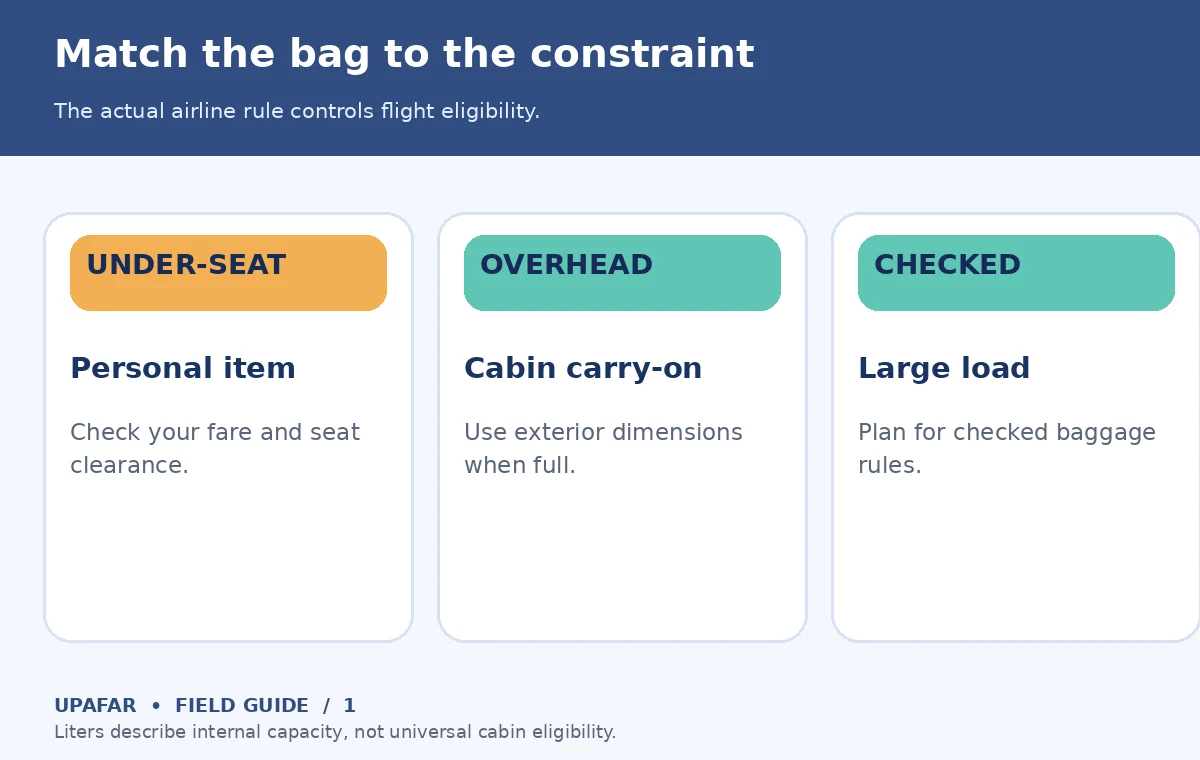
Three selection lanes help narrow the search. A compact personal-item bag prioritizes access and a restrained exterior footprint. An overhead carry-on bag prioritizes clothes organization while still meeting a carrier’s allowance. A larger travel or trekking-style pack emphasizes carrying comfort or bulky equipment but may need checked baggage. These are use cases, not hard liters-to-inches conversions. Some backpacks are labeled for travel but built with camping suspension systems that make them awkward to store in a cabin bin.
Fit comes before clever compartments
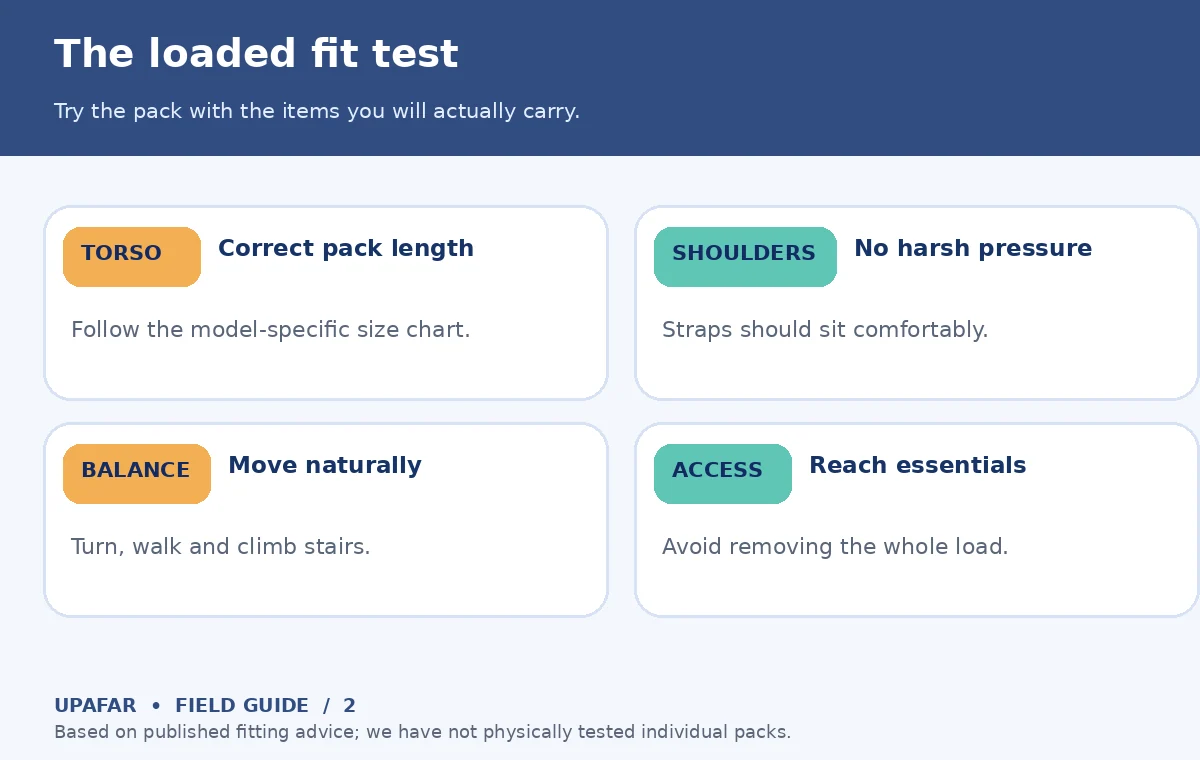
REI’s backpack-fitting guidance emphasizes torso length rather than overall height for properly sized packs, plus the fit of the hipbelt and shoulder harness. Not every small travel backpack needs a load-bearing hipbelt, but when a loaded pack is heavy or carried for long distances, fit matters. Test whether the shoulder straps pinch, whether the bag swings when you turn, and whether you can put it on without wrestling with dangling straps. An impressive list of pockets does not compensate for an uncomfortable carry.
Bring a realistic load to your fitting test: laptop and charger if relevant, your usual shoes or clothing cubes, water, and the items you would put in outside pockets. Walk up stairs, turn through a doorway, and sit down while wearing it, if practical. Adjust the straps after loading, then check again. If the bag pulls backward, concentrates weight on one shoulder, or cannot be adjusted for your body, look at a different harness or design. Use a retailer’s fit chart for that specific model; a generic small or medium label is not enough.
A suitcase-style clamshell opening makes it easier to see clothes in accommodation, while top-loading designs may suit travelers who frequently carry gear outdoors. A separate laptop area can speed access but may add structure and weight. Water resistance is different from waterproofing, especially around zippers and seams. External pockets are useful only if they remain secure and do not exceed airline limits when filled. Prefer a zipper system you can operate with one hand over multiple hidden compartments you cannot remember.
Pack once, then measure again
Place heavier items close to your back to improve balance, keep frequently needed items in an accessible small pocket, and avoid stuffing the deepest corner with things you need at security. Toiletries and other restricted items must satisfy the applicable security rules at your departure airport; requirements vary by location and item. Consider where you will put wet clothing or shoes without contaminating clean clothes. A durable packing cube can help organize a pack, but compression does not make airline exterior measurements disappear.
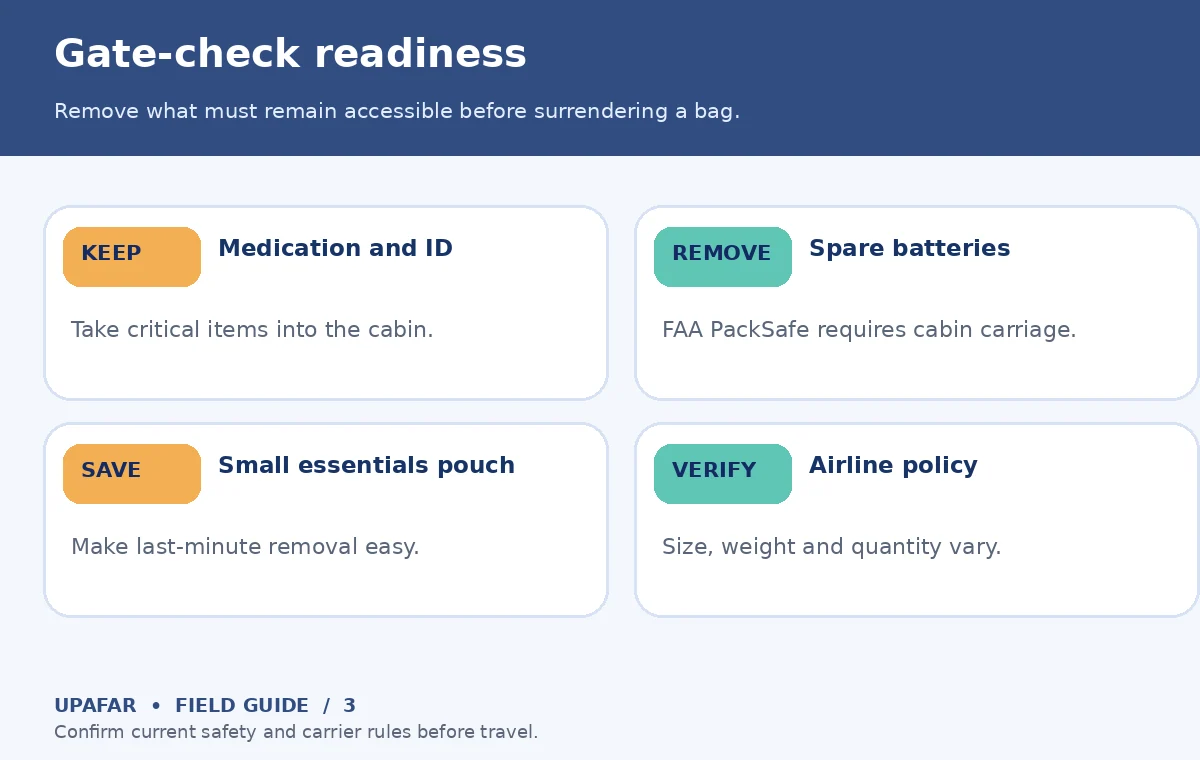
Remember power banks and spare lithium batteries: FAA PackSafe guidance requires them in the cabin rather than checked baggage, subject to capacity and airline rules. If your bag is gate-checked, remove spare batteries, critical medication, keys, and documents before handing it over. Do not assume that anything sold as “travel gear” is automatically allowed through security. Ask your airline or regulator for guidance on unusual equipment rather than relying on a blog’s broad rule.
Measure the loaded exterior height, width, and depth with a tape measure. Then weigh the bag if your carrier has a weight limit. Check whether the bag stands on its own, slips onto crowded transit, and fits where you plan to store it at your lodging. For a mixed trip with city days and hiking, you may prefer a modest main bag plus a lightweight daypack instead of one bulky multi-purpose bag. Count the weight of the empty backpack: an elaborate travel harness can consume a meaningful part of your baggage allowance before packing.
Decide what you can skip
Skip a dedicated laptop sleeve if you rarely carry a laptop and the padding prevents clothes from fitting. Skip a large hiking frame if your walks are short and your route uses taxis. Skip extra volume “just in case” if it tempts you to add unneeded weight. Conversely, a bag with too little structure can become painful when loaded with dense gear. The goal is not minimalism at all costs; it is using space and features for a confirmed purpose.
A simple scorecard uses five tests: airline fit, loaded-body comfort, easy access to essentials, expected durability, and weight before packing. Decide which two matter most for your trip and reject bags that fail those rather than adding up marketing features. If you are shopping online, compare manufacturer measurements with your airline and read return policies so you can test the loaded pack at home. No brand or model recommendation is implied by that process.
How We Research Travel Backpack Fit
We checked U.S. DOT and FAA passenger-baggage guidance and REI’s fitting method on October 19, 2026, then compared live search intent around cabin sizing and travel-pack organization. Our distinctive method is a loaded-bag test tied to airline rules, without unsupported volume equivalences or static product rankings. Your carrier’s fare policy and the manufacturer’s exterior measurements control the final decision. UpAfar does not claim to have physically tested every backpack, and there are no endorsed merchants in this guide. See the affiliate disclosure.
Frequently Asked Travel Questions
No. Airline allowances are specified in exterior dimensions and sometimes weight, and pack shapes vary. Measure the loaded bag against the rules for your actual fare.
Not always. It becomes more useful when carrying substantial weight for longer walks; the loaded pack must fit your torso and body.
A clamshell helps access packed clothing in hotels. A top-loader may be useful for some outdoor use. Choose according to how often you open and carry the bag.
Yes, if overhead space is limited or airline rules require it. Keep documents, medicines and spare lithium batteries accessible so you can remove them.
Use liters to estimate packing capacity; use your airline’s exterior measurements for flight eligibility, then confirm comfort with a realistically loaded test.